

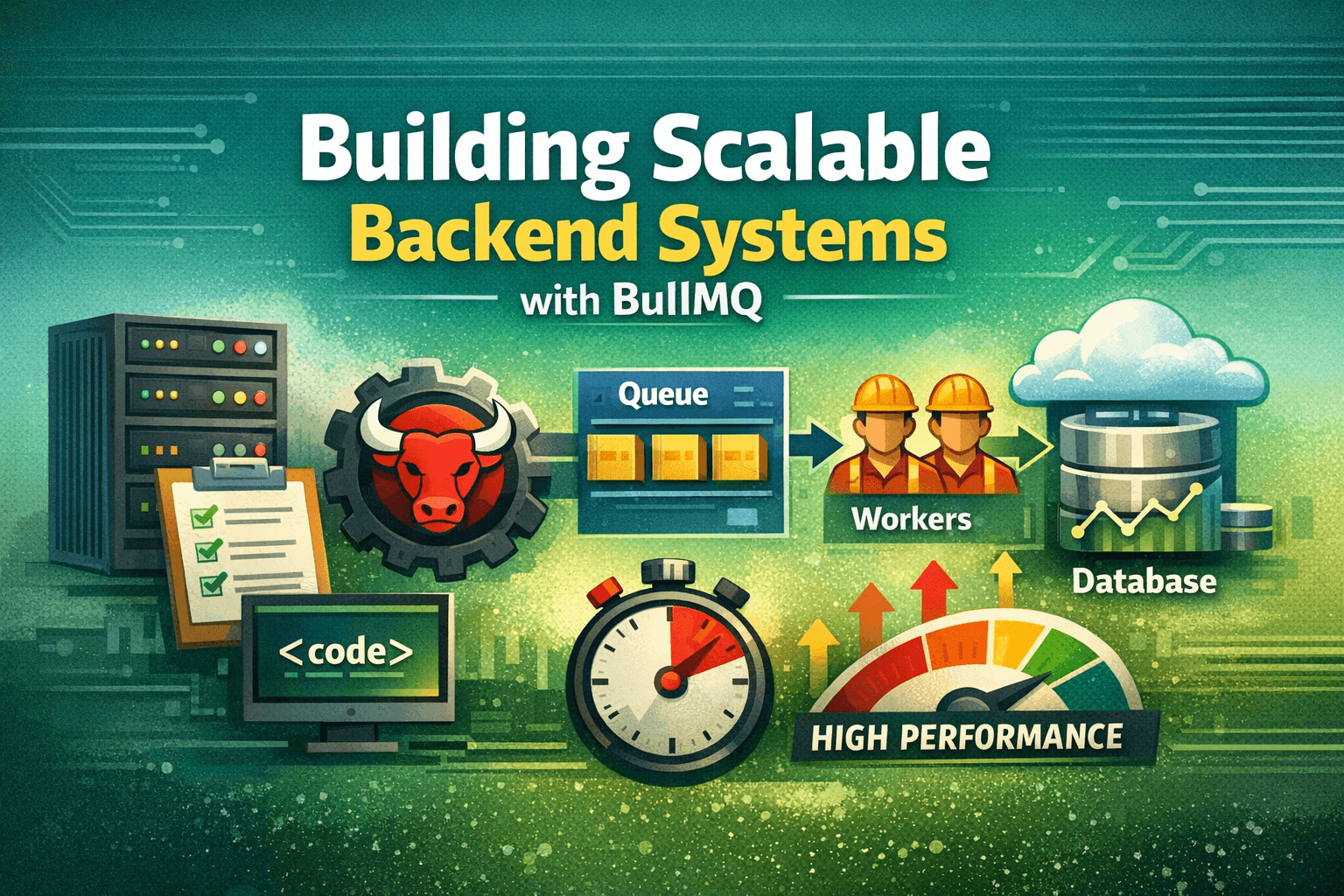
Building Scalable Backend Systems with BullMQ
Designing queue-based architectures for high-performance applications
🚀 Introduction
As applications grow, handling heavy workloads synchronously becomes inefficient. Tasks like web scraping, email sending, and data processing require a scalable approach.
This is where BullMQ and queue-based systems come into play.
⚠️ The Problem with Traditional Backend
- Blocking API requests
- Slow response times
- System crashes under heavy load
- No retry mechanism
⚙️ What is BullMQ?
BullMQ is a powerful Redis-based queue system that allows you to process jobs asynchronously. It helps distribute workload across multiple workers and ensures reliability through retries and failure handling.
🏗️ Architecture Overview
- API Server → Adds jobs to queue
- Redis → Stores job data
- Worker → Processes jobs
- Database → Stores results
💻 Code Example
Queue Setup
import { Queue } from 'bullmq';

const queue = new Queue('scraping', {
  connection: {
    host: 'localhost',
    port: 6379,
  },
});
Adding Job
await queue.add('scrapeProfile', {
  username: 'example_user',
});
Worker
import { Worker } from 'bullmq';

const worker = new Worker('scraping', async (job) => {
  const { username } = job.data;

  console.log('Scraping:', username);

  // scraping logic here
}, {
  connection: {
    host: 'localhost',
    port: 6379,
  },
});
🔥 Key Features
- Retry failed jobs automatically
- Delayed jobs and scheduling
- Concurrency control
- Distributed processing
🌍 Real-World Use Case
In a social media scraping system:
- Users request analytics
- Jobs are added to BullMQ
- Workers scrape data using Playwright
- Results are stored in MongoDB
🎯 Conclusion
BullMQ enables scalable, resilient backend systems by offloading heavy tasks into queues. This approach improves performance, reliability, and scalability of modern applications.